

Imagine you are a world-famous streamer, minding your own business, when a random freestyle on a Twitch stream changes your life. In early 2024, that is exactly what happened to Tyler “Ninja” Blevins. A hyperpop artist, ericdoa, was in the middle of a passionate, hour-long improvisation when he belted out a simple, hypothetical question: “Imagine if Ninja got a low taper fade?” . The internet, as it does, took the ball and ran with it—straight to the barbershop. What was once a subtle haircut technique has become a massive cultural phenomenon, inspiring millions of videos, art trends, and conversations about masculinity and style . This is the story of how a quiet haircut became one of the loudest memes of the decade and why it continues to dominate in 2026.
From a Freestyle to a Viral Anthem
The origin story of the low taper fade meme begins not in a barber’s chair, but on a live stream. On January 5, 2024, artist ericdoa was freestyling for his audience when he began to ponder the hypothetical haircut of streamer Ninja . The clip was uploaded to TikTok and exploded, gaining 1.4 million views in a single day . The audio, a simple loop of the question, became a viral sound, inspiring a wave of reaction videos and fan art .
Ninja himself eventually weighed in. In a duet video, he showcased his own version of the cut, effectively confirming the hype . The trend wasn’t just about him, though. As the meme grew, users began creating art featuring their favorite pop culture characters—from Sonic to Jujutsu Kaisen’s Aoi Todo—sporting the signature fade . This art trend solidified the low taper fade not just as a style, but as a flexible joke about transformation and style .
The “Backbencher” and the Meme’s Evolution
While the Ninja connection launched the trend, its staying power comes from its relatability. The style evolved into a “backbencher low taper fade” meme, which humorously pairs the clean, sharp haircut with the archetype of the laid-back student in the back of the classroom . This iteration is a perfect example of how trends evolve. It contrasts a “low-effort” persona with a “high-effort” aesthetic, creating a joke that resonates deeply with Gen Z . The joke suggests that even a student who might not be paying attention in class has their priorities straight when it comes to personal grooming. It’s a subtle commentary on identity and self-expression in a hyper-visual world, turning the haircut into a symbol of hidden dedication .
The Anatomy of a Low Taper Fade
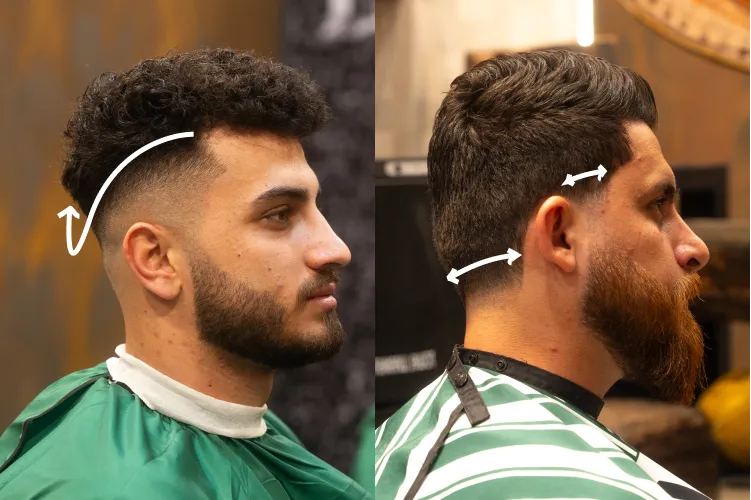
What exactly is a low taper fade? Experts describe it as a subtle gradient change. The hair on top stays longer while the sides gradually shorten, beginning just above the ears and blending smoothly down to the skin . Unlike a high fade, which climbs higher up the head, the low taper is “safe” and versatile, not calling attention to itself . Barber JC Chavez explains, “It is subtle compared to other types of fades. With the low taper, it’s not super obvious that you have ‘a fade’” . This universal appeal makes it accessible. “The nicest thing about a low taper is that pretty much anyone can get it. There aren’t many restrictions,” Chavez adds . Its understated nature is its superpower, as it can be applied to nearly any hairstyle without a significant commitment, making it the ultimate choice for a clean, polished look .
Cultural Significance and Future Predictions
Looking ahead, the low taper fade is no longer just a fleeting trend. It has become a staple in the men’s grooming lexicon, one that many experts believe is here to stay . Its journey from a functional military cut to a symbol of internet cool is a testament to the power of digital culture . The style’s prevalence in Black male grooming culture is notable, where it is seen as a means of self-expression and a connection to a rich cultural history .
The future of the fade is one of personalization. While the classic cut remains popular, variations like textured tops, design lines, and the “backbencher” aesthetic are likely to continue . The meme has created a cultural shorthand. When someone mentions a low taper fade, they aren’t just talking about a haircut; they are referencing a moment in internet history, a shared joke that remains “massive” .
Key Takeaways
- Origin and Context: The low taper fade meme originated from a viral 2024 Twitch clip by ericdoa asking, “Imagine if Ninja got a low taper fade?” .
- The Haircut: It is a versatile style defined by a subtle, gradual fade that starts low, just above the ears .
- Evolution: The trend has evolved to include the “backbencher” meme, contrasting a relaxed classroom persona with a sharp, high-maintenance haircut .
- Cultural Significance: The style is a staple in men’s grooming, with deep roots in Black male culture and growing relevance in conversations about masculinity .
Frequently Asked Questions
What is a low taper fade?
A low taper fade is a haircut where the hair on top remains longer while the sides are cut to gradually shorten (fade) starting low on the head, usually just above the ears .
Is the low taper fade still popular in 2026?
Yes, it remains one of the most requested and popular men’s haircuts, having transcended its meme origins to become a modern classic .
Who does the low taper fade suit?
Almost everyone. It is one of the most versatile cuts and is suitable for all face shapes and hair types, including straight, wavy, and curly .
How is a low taper different from a high fade?
A low taper fade starts much lower on the head (near the ears), creating a subtle blend. A high fade starts higher up the head, creating a sharper, bolder contrast .
How often do you need to maintain it?
For the best look, you should visit the barber every three to four weeks to keep the fade clean and precise .
Conclusion
The story of the low taper fade is a unique case study of internet culture colliding with the art of grooming. What began as an off-the-cuff freestyle has become a global meme, influencing how millions of people choose to style their hair. It is a testament to how a simple question can capture the internet’s imagination and evolve into a symbol of style, humor, and identity. Whether you are looking for a new haircut or just want to understand what everyone is talking about, one thing is certain: the low taper fade is, and likely will remain, massive. Ready to take the plunge? Show this article to your barber and join the conversation.
You Mey Olso Read
Clothing Styles 2026: How Technology, Culture, and Ethics Are Revolutionizing Fashion
