

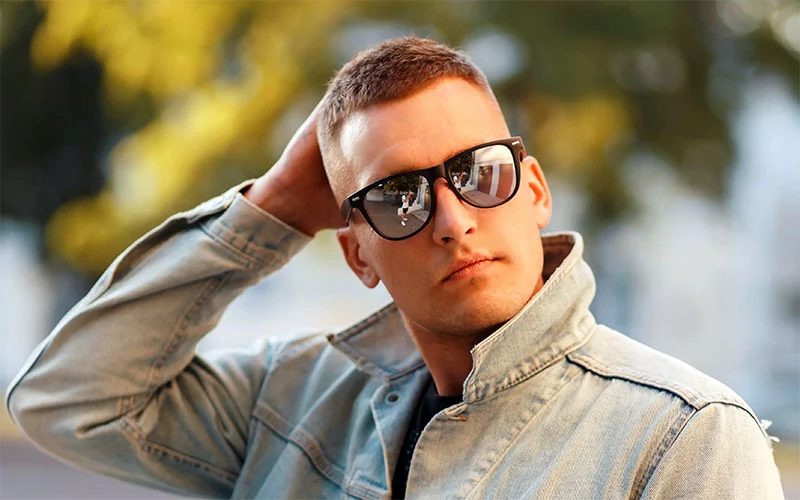
The buzz of clippers has always been the soundtrack to a soldier’s first day of service. It is a ritual of transformation, a shedding of civilian identity in exchange for a uniform look that symbolizes unity and discipline. For centuries, the military haircut has been a blunt instrument of conformity, a visual declaration that the individual submits to the collective. But today, that simple act of trimming hair has become a battlefield of its own, pitting tradition against inclusion, medical necessity against aesthetics, and ancient warrior culture against modern digital trends. The world’s armed forces are in the midst of a grooming crisis, and the stakes are surprisingly high.
Recent policy upheavals in the United States, the United Kingdom, and Canada reveal a deep fracture in how modern militaries view discipline. At the heart of the debate is a question that transcends mere fashion: Can a military haircut define a fighting force in the 21st century, or must it adapt to survive? For the men and women in uniform, the answer determines whether they can serve, how they are perceived, and even if they can keep their careers. While a high and tight or a clean-shaven face has long been the gold standard, emerging trends like the mullet and the warrior cut are forcing a reckoning .
The current friction isn’t just about rebellious soldiers wanting to look cool. It involves complex intersections of race, religion, and health. In the US, Secretary of War Pete Hegseth’s recent directives have taken a hardline stance against beards, declaring the “era of unprofessional appearance is over” . Simultaneously, TikTok trends are celebrating the “warrior cut,” a textured, messy variation of the classic military haircut that draws inspiration from historical fighters but defies modern grooming regulations . This clash between the top brass and the barracks, between Instagram and the Pentagon, defines the new frontline of military identity.
The Historical Roots of the Military Haircut
To understand why military haircuts cause such controversy, we must look at their evolution. The military haircut is not a static concept; it has fluctuated wildly throughout history. In the 18th century, powdered wigs were the standard for officers, signifying status rather than practicality. The shift toward the short back and sides we recognize today was born out of grim necessity. During World War I, the requirement for a clean-shaven face and short hair wasn’t about aesthetics; it was about survival. A gas mask requires a tight seal to function, and facial hair jeopardizes that seal, potentially costing a soldier their life .
However, this practical origin story is only part of the narrative. The military haircut has also been used as a tool of psychological transformation. In ancient Rome, soldiers wore short hair to distinguish themselves from the “barbarian” tribes they fought, who often sported long, flowing locks. The Greeks, as noted in Homer’s Iliad, cropped their forelocks short while leaving the back long—an early version of the mullet—for practical warmth and to prevent enemies from grabbing their hair in combat .
The modern “induction cut,” popularized during World War II and the Korean War, served a dual purpose. It prevented the spread of head lice in cramped barracks and stripped recruits of their individuality. This act of depersonalization is key to building the collective unit where every soldier looks the same, fostering a sense of equality and belonging. It was a “reset button” for the mind. Yet, as standards loosened slightly in the late 20th century, allowing variations like the “high and tight,” the military haircut became a symbol of tribal identity for those inside the service and a sign of “otherness” for civilians looking in .
The Current Global Split: Mullets, Beards, and Bans
Today, the rules governing appearance are fragmented globally. The recent debate over the mullet is a prime example. While the “business in the front, party in the back” style is a cultural phenomenon in 2025, most major military powers, including the US, UK, and China, have banned it. Canada, however, broke ranks last year by allowing personnel to sport mullets, highlighting a more relaxed attitude toward individual expression . Meanwhile, the British Royal Air Force (RAF) has modernized its dress regulations to allow goatees and jewelry, though they explicitly maintain that the Mohawk and the mullet are still off-limits .
But the most contentious issue by far is the beard. The US military is currently undergoing a radical reversal of its looser grooming standards. Recent directives from the Department of War have strictly limited exemptions for beards. Previously, those suffering from pseudofolliculitis barbae—a painful skin condition often resulting in razor bumps that disproportionately affects Black men—could receive permanent shaving waivers. Under the new hardline policy championed by Secretary Hegseth, these waivers are now temporary. Service members have only 12 months to resolve their skin issues; if they cannot, they face administrative separation .
This policy, framed as a return to the “warrior ethos” and a crackdown on “beardos,” has sparked immediate backlash. Critics argue that the policy is discriminatory, as the condition affects up to 60% of Black men, potentially purging a significant portion of the force solely due to a genetic predisposition to shaving irritation . This contrasts sharply with the UK, where the Army lifted its long-standing ban on beards last year, aligning with the Royal Navy and RAF. For the UK, the policy shift was about “modern, inclusive values,” while in the US, it is seen as a regression .
The Science of Shaving and Service
The crux of the US military’s grooming crisis is rooted in dermatology and medical necessity. The clean-shaven look demands constant maintenance, which can be physically harmful to many service members. The condition known as pseudofolliculitis barbae occurs when curly hair follicles curve back into the skin after shaving, causing inflammation, redness, and painful pustules. For years, the military granted “shaving profiles” to allow these individuals to grow short, neat beards to avoid the painful cycle of ingrown hairs .
Secretary Hegseth’s order effectively eliminates permanent profiles, arguing that if a soldier cannot shave, they cannot meet the professional standard. The Pentagon memo states that commanders must initiate separation proceedings after 12 months of treatment if the condition doesn’t improve . This creates a moral and ethical dilemma: is a military haircut—specifically the absence of a beard—more important than retaining highly qualified, experienced personnel?
Furthermore, the policy appears to be moving to limit religious accommodations as well. While the official memo focuses on medical exemptions, the new review processes for religious accommodations signal an uphill battle for Sikhs, Muslims, and Jews whose faith may require them to keep their hair or beards . This raises significant constitutional questions about the right to religious expression within the armed forces, pitting the “brand” of the military against the diversity of its recruits.
The Rise of the “Warrior Cut” and Pop Culture
While top brass debate beards in Washington, a different conversation is happening in barbershops worldwide. The “warrior cut” is currently one of the hottest trends on TikTok, with millions of posts celebrating this low taper fade that leaves a longer, textured length on top . It is described as a “messy-chic” style that suggests strength and toughness. But what is interesting is that the warrior cut is explicitly inspired by military and historical warrior cultures. It evokes the look of a modern-day soldier or an ancient Viking, blending the discipline of a taper with the ruggedness of battle-ready hair.
This trend demonstrates that the “military haircut” is a powerful aesthetic in the civilian world. It represents masculinity, resilience, and low-maintenance practicality. The core elements of a military haircut—clean lines, a sharp fade, and a structured shape—are highly sought after by men who want to look sharp without much effort . However, the trend diverges from regulation by embracing texture and a “lived-in” feel. While a strict high and tight might be required in the barracks, the civilian version allows for personality.
This creates a cultural disconnect. The military is trying to enforce rigid uniformity (e.g., the Army’s new rule that men must have tapered or faded haircuts with a maximum of 2 inches on top) while the civilian world celebrates the idea of the military look but modifies it for personal style . The military sees grooming as a matter of “good order and discipline,” but the civilian world sees it as a fashion statement. This tension suggests that as the recruitment pool becomes more digitally native and individualistic, the military may struggle to maintain its rigid aesthetic standards.
Practical Takeaways: What This Means for Service Members
The recent wave of policy changes has practical, real-world consequences for those in uniform. It is not merely a theoretical debate about identity, but a matter of career survival and daily life. Here are the key takeaways from the latest directives.
First, the “era of the shaving profile” is ending. If you are a service member who relies on a permanent medical waiver for a beard, you are now on a timeline. You must engage with a medical treatment plan to resolve your condition within 12 months, or you risk being administratively separated from service. It is no longer enough to have a diagnosis; you need a treatment plan and measurable improvement .
Second, grooming standards are becoming more prescriptive, not less. In the US Army, rules regarding the “fade” are now highly specific, banning sharp undercuts and requiring a smooth blend. For women, regulations on ponytails and braids have been clarified, but limits on length (6 inches from the collar) and width (2 inches for braids) require constant vigilance to maintain compliance . This “zero ambiguity” approach aims to eliminate gray areas but also increases the burden on service members to constantly measure their appearance against a precise standard.
Third, for those seeking religious accommodations, the administrative path is now more difficult. New Army directives require formal chaplain interviews and a centralized approval process via the IPPS-A system. Previously approved accommodations are being resubmitted for re-evaluation in a phased timeline, meaning even if you were granted a waiver before, you are not safe from scrutiny .
Future Outlook and Industry Implications
The trajectory of military grooming standards suggests that the pendulum might swing back and forth violently in the coming years. The current US leadership’s focus on a “clean-shaven” force appears to be a direct reaction to the relaxed standards of the previous era. However, demographic trends suggest that a more diverse fighting force will continue to pressure these regulations. With a significant percentage of recruits coming from minority backgrounds where shaving can cause medical issues, the policy may ultimately hurt recruitment and retention .
Meanwhile, the commercial grooming industry—from barbershops to shaving product manufacturers—is closely watching. The demand for fades and precise tapers remains high, driven by military aesthetics . However, if beards are heavily restricted in the military, civilian trends may rebel, leading to a surge in facial hair as a form of counter-culture. The mullet’s resurgence is a testament to this cyclical nature of style .
Globally, the US is becoming an outlier. With the UK relaxing rules, Canada allowing mullets, and other NATO allies embracing more inclusive grooming standards, the US military is positioning itself as the strictest of the major Western powers . This could have diplomatic and cultural implications, creating a divide on joint operations regarding what “professional” looks like. Ultimately, how the military haircut evolves will reflect a deeper struggle to balance the ancient demands of war with the modern realities of a diverse society.
Key Takeaways
- Medical vs. Uniformity: The US military has ended permanent shaving waivers for conditions like pseudofolliculitis barbae, forcing service members to fix their condition or face separation within 12 months .
- Religious Scrutiny: New policies are systematically re-evaluating and centralizing the approval of religious accommodations for beards and uncut hair, making it harder to secure an exemption .
- Global Divergence: While the US cracks down, the UK RAF allows goatees, and Canada permits mullets, highlighting a significant split in NATO grooming standards .
- Precision is Mandatory: Modern regulations are hyper-specific, detailing exact lengths for hair on top (2 inches) and back (1 inch), and banning general “conservative” looks in favor of measurable metrics .
- Trends are Clashing: Despite military bans on mullets and the rise of messy “warrior cuts” on TikTok, the disciplined aesthetic of a fade remains a dominant trend in civilian culture .
Frequently Asked Questions
1. Can I get kicked out of the military for having a beard?
Yes, under current US Department of War policy, if you require a shaving waiver for more than 12 months of medical treatment, unit commanders are directed to initiate separation proceedings. This applies if the condition does not improve or is not classified as a disability .
2. Are mullets allowed in any branch of the US military?
Currently, the US military is cracking down on non-traditional hairstyles. The Army explicitly states that mullets are not allowed and that haircuts must be tapered or faded, eliminating the “party in the back” look. However, the Canadian Armed Forces has recently permitted the wearing of mullets .
3. What is the “Warrior Cut” that is trending on TikTok?
The warrior cut is a men’s haircut featuring a low taper fade with a longer, textured length on top. It is inspired by military and historical warrior aesthetics but is less strict than a regulation haircut, allowing for a “messier” finish .
4. Why do military haircuts emphasize being clean-shaven?
Historically, being clean-shaven ensures a proper seal for gas masks, which is crucial in combat. It also promotes uniformity, discipline, and the prevention of lice in field conditions. It is seen as a hallmark of a professional military appearance .
5. Do the new grooming standards apply to all ethnicities equally?
The standards apply equally on paper. However, critics argue that the crackdown on shaving waivers disproportionately affects Black service members, who are statistically more likely to suffer from pseudofolliculitis barbae (razor bumps) due to hair texture, potentially leading to higher separation rates .
6. Are women in the military subject to the same strict hair length rules as men?
No, rules differ. Women are allowed longer hair, but it must be worn in specific styles (like ponytails or braids) that are uniform and secured, with strict width limitations. They are also subject to rules about makeup and nail color .
A Call for a New Standard?
As the clippers continue to buzz in barbershops and training camps, the trajectory of the military haircut is at a crossroads. Will it remain a steadfast symbol of discipline, or will it evolve to reflect the diverse society it protects? The current “zero tolerance” approach in the US, championed by leaders like Pete Hegseth, signals a desire to return to a rigid past. He argues that “if you don’t want to shave and look professional, it’s time for a new profession” .
Yet, the data suggests that this ideology might be shortsighted. By potentially forcing out individuals due to the color of their skin and the texture of their hair, the military risks not only its reputation but its effectiveness. A fighting force that pushes away qualified personnel over a medical condition—a classic military haircut issue—is a force that weakens itself. The conversation about grooming is really a conversation about who gets to serve and how we define professionalism.
For the modern soldier, navigating these rules is a minefield. It requires a sharp eye for detail and a constant awareness of the latest memos. As the debate rages on, one thing is certain: the military haircut is far more than just a trim. It is a statement of intent, a piece of ammunition in the culture wars, and, for some, a hill worth dying—or being discharged—on.
What are your thoughts on the current grooming standards? Have you faced challenges with military haircut regulations? Join the conversation and share your experiences below.
