
The moment your camera turns on, judgments begin forming. Not loudly, not cruelly, but instantly. In today’s remote-first America, first impressions no longer start in hallways or conference rooms. They begin in virtual squares on a screen. This silent shift is why virtual meeting etiquette is suddenly everywhere, reshaping how professionals are evaluated, promoted, and trusted. What once felt optional now defines credibility.
Across the United States, millions of workers are rethinking how they show up online. From hybrid offices to fully remote teams, video calls have become the new workplace stage. Small behaviors now carry big consequences. A delayed response, poor eye contact, or multitasking glance can quietly impact reputation. This growing awareness is turning etiquette into one of the most talked-about workplace trends of the year.
Why virtual meeting etiquette is suddenly trending nationwide
Search interest around virtual meeting etiquette has surged as companies double down on hybrid work models. According to recent workforce surveys, more than 70 percent of U.S. professionals attend at least three video meetings per day. That volume has transformed online interactions into a core professional skill rather than a temporary adjustment. Leaders are realizing that digital behavior shapes trust just as much as in-person conduct.
The shift is also cultural. Younger professionals entering the workforce are digital-native, while senior leaders are adapting fast. This mix has created unspoken friction around expectations. Clear etiquette standards help bridge that gap. From punctuality to tone of voice, small cues now influence performance reviews, collaboration quality, and leadership perception across industries.
The hidden psychology behind how people judge you on video calls
Human brains are wired to read micro-signals. In virtual settings, those signals change form but not importance. Eye contact, posture, facial engagement, and response timing all contribute to what psychologists call digital body language. Virtual meeting etiquette helps professionals manage these cues intentionally rather than accidentally.
Research in workplace communication shows that people form impressions within seconds of joining a call. A cluttered background or distracted posture can signal disengagement, even when intentions are good. On the other hand, clear presence and thoughtful responses build authority. This psychological layer explains why etiquette is no longer about politeness but about perception management in modern work culture.
How remote work culture made etiquette a career skill
Remote work has permanently altered how teams collaborate in the United States. Even companies pushing return-to-office policies still rely heavily on video conferencing. This reality has elevated virtual meeting etiquette into a core professional competency, similar to email writing or presentation skills.
Employees who master online professionalism often stand out faster. They communicate clearly, respect time boundaries, and contribute with confidence. In contrast, poor virtual habits can quietly stall growth. As hybrid work becomes the default, organizations increasingly value individuals who understand the unspoken rules of digital collaboration and apply them consistently.
Common mistakes professionals still make in virtual meetings
Despite years of experience with video calls, many professionals repeat the same mistakes. Multitasking during meetings remains one of the most damaging habits. Checking emails or phones signals disengagement, even if productivity feels higher. Virtual meeting etiquette encourages full presence, which strengthens trust and participation.
Another frequent issue is poor audio or lighting setup. These technical oversights can distract teams and reduce message clarity. Speaking too long, interrupting others, or staying muted unintentionally also disrupt flow. Each of these errors seems small alone, but together they shape how colleagues perceive reliability and respect in online spaces.
The role of leadership in setting virtual meeting standards
Leaders play a decisive role in normalizing good virtual meeting etiquette. When managers model clear communication, punctuality, and attentiveness, teams naturally follow. Culture is shaped more by behavior than by policy. In high-performing organizations, leaders treat online meetings with the same seriousness as in-person ones.
Executive behavior also influences psychological safety. When leaders allow space for voices, manage meeting time effectively, and avoid distractions, participation rises. This approach improves workplace communication and morale. As leadership styles evolve, digital etiquette is becoming a visible marker of credibility and emotional intelligence.
How technology is reshaping online professionalism
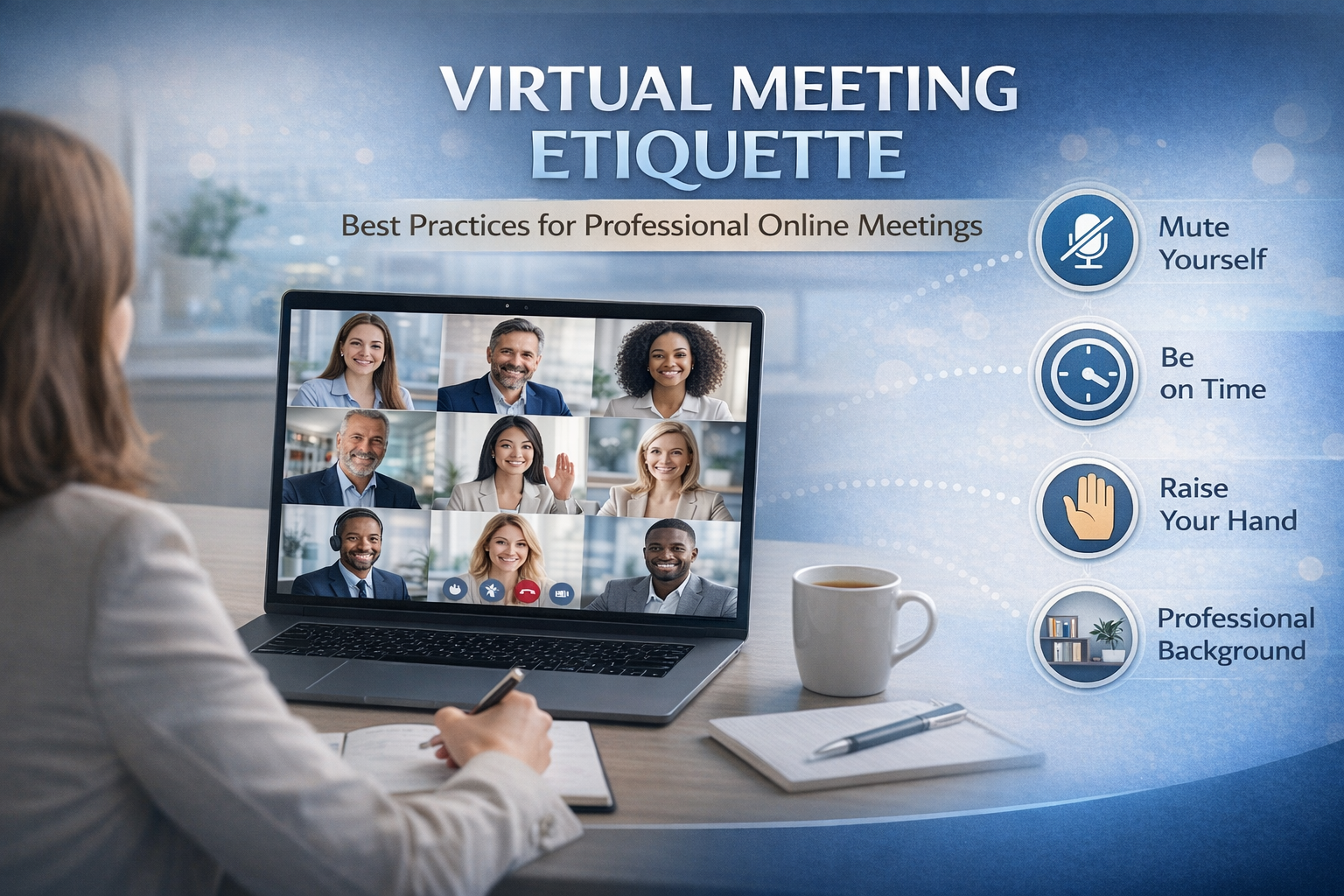
Technology itself is pushing etiquette forward. Platforms now include features like hand-raising, live reactions, and AI-generated summaries. These tools aim to reduce chaos and improve clarity. Still, tools alone cannot replace human judgment. Virtual meeting etiquette guides how and when to use these features effectively.
AI-driven analytics are also entering the space, tracking engagement levels and speaking time. This data-driven future means behavior may soon be measurable. Experts predict that understanding digital presence will become part of professional training programs. As technology evolves, etiquette will adapt alongside it, blending soft skills with smart systems.
Virtual meeting etiquette and its impact on career growth
Career advancement increasingly depends on visibility and communication quality. In hybrid environments, performance is often observed through screens rather than office interactions. Virtual meeting etiquette helps professionals project confidence, clarity, and leadership potential even from a distance.
Recruiters and managers now pay close attention to how individuals express ideas online. Clear speech, respectful listening, and concise contributions signal readiness for responsibility. Over time, these habits influence promotions and opportunities. Mastering online professionalism is no longer optional for those aiming to grow in competitive industries.
Trends shaping the future of online meetings in the US
Experts predict that hybrid work will stabilize rather than disappear. This means virtual meeting etiquette will remain a long-term priority. Future trends include shorter meetings, stronger agendas, and greater emphasis on asynchronous communication. These shifts aim to reduce burnout while improving focus.
Another growing trend is etiquette training integrated into onboarding. Companies are investing in workshops that teach digital communication norms. As workplace communication evolves, etiquette will be treated as a strategic skill. The professionals who adapt early will navigate change more smoothly and stay ahead of shifting expectations.
Why etiquette now defines trust in digital workplaces
Trust is harder to build when teams rarely meet in person. That is why virtual meeting etiquette plays such a critical role in modern collaboration. Consistent behavior creates predictability, and predictability builds trust. When colleagues know what to expect, collaboration becomes smoother and more efficient.
Simple habits like being prepared, listening actively, and respecting time send powerful signals. Over time, these actions shape reputation. In distributed teams, reputation travels fast. Those who demonstrate strong etiquette often become informal leaders, regardless of title or tenure.
What professionals should do next to stay competitive
As expectations rise, awareness alone is not enough. Professionals must actively refine how they show up online. Reviewing past meetings, seeking feedback, and observing strong communicators can make a measurable difference. Virtual meeting etiquette improves with intention and practice, not perfection.
The future of work will reward adaptability. Those who treat online presence as a skill will thrive in hybrid environments. Whether you are a manager, freelancer, or early-career professional, your digital behavior tells a story. Make sure it reflects focus, respect, and readiness for what comes next.
The conversation around virtual meeting etiquette is only getting louder. As workplaces continue to evolve, staying informed is no longer optional. Follow emerging trends, refine your communication habits, and take control of how you are perceived in every virtual room you enter. The next opportunity may depend on it.
You may also read
Pedro Paulo Executive Coaching Is Reshaping U.S. Leadership Today
