

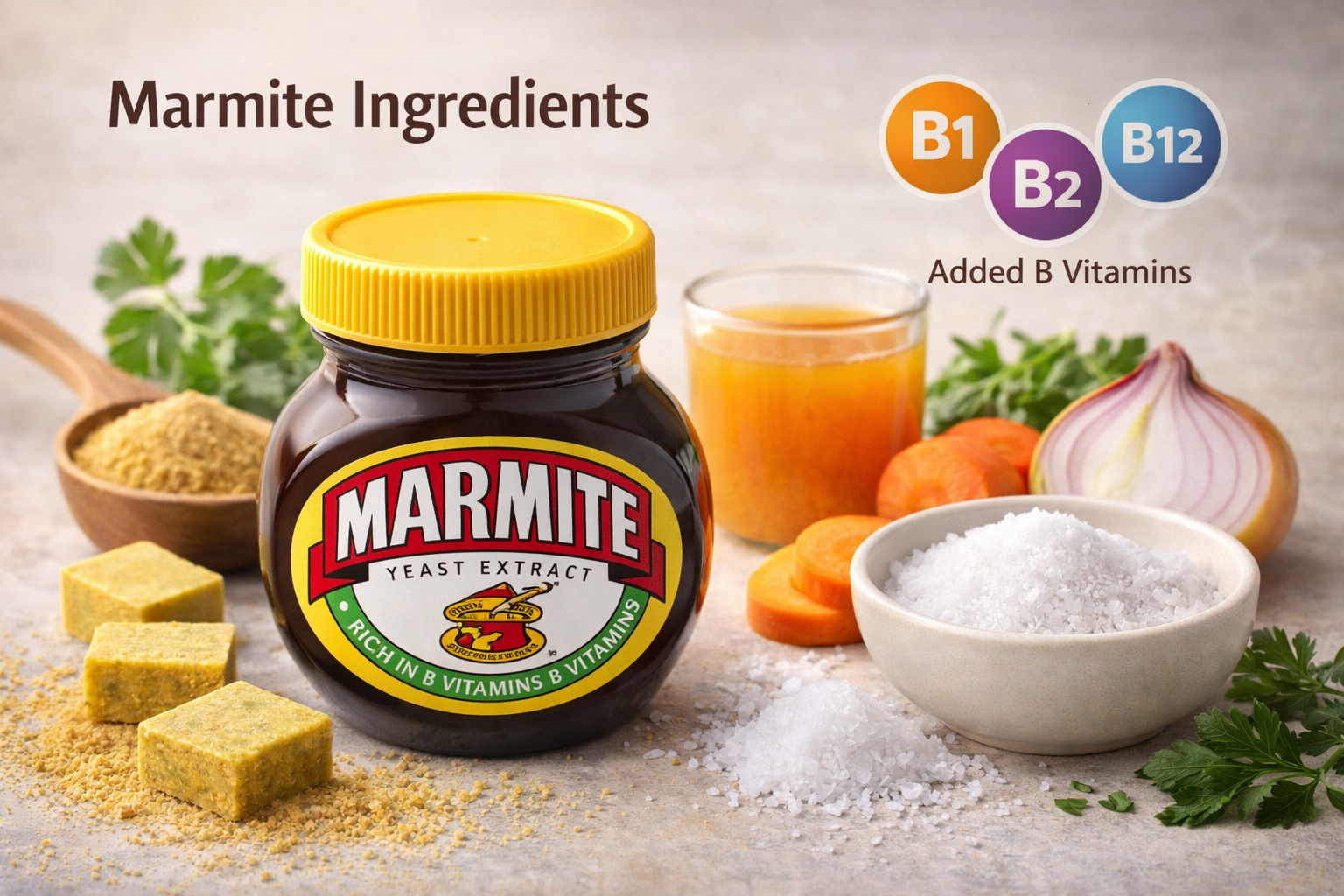
The first reaction is almost always the same. A small jar. A dark, glossy spread. One taste, and the internet explodes. In recent months, Americans are discovering Marmite in record numbers, and not just for its famously divisive flavour. Searches for marmite ingredients are surging across the United States as health-conscious shoppers, curious foodies, and social media creators ask the same question: what exactly is in this British cult spread, and why does it trigger such strong reactions?
From TikTok taste tests to grocery aisle debates, Marmite has crossed the Atlantic as more than a novelty. It has become a conversation about food science, nutrition, and cultural taste differences.
Why marmite ingredients are suddenly trending in the United States
Interest in marmite ingredients has jumped sharply over the past year, according to US search trend data, with spikes tied to viral videos and celebrity chef mentions. As international foods gain popularity, American consumers are reading labels more closely than ever. Marmite’s bold marketing and polarizing reputation naturally lead people to question what gives it such a powerful taste.
The timing matters too. With growing awareness around ultra-processed foods, shoppers are scrutinizing ingredient lists for additives, sugar, and artificial preservatives. Marmite stands out because its formula is surprisingly simple compared to many spreads sold in US supermarkets. This contrast has turned curiosity into a broader conversation about how food is made and marketed across cultures.
Breaking down the core marmite ingredients
At its core, Marmite is made from yeast extract, a byproduct of beer brewing. This ingredient is responsible for its deep umami flavour and dark colour. When brewers finish fermenting beer, the remaining yeast is harvested, concentrated, and blended into a spreadable form. This process often surprises Americans, many of whom associate yeast only with bread or baking.
Beyond yeast extract, marmite ingredients include vegetable extract, salt, and a blend of vitamins. Unlike many spreads, Marmite contains no added sugar and very little fat. This simplicity is one reason nutritionists are taking a closer look at it. For US consumers used to long ingredient lists, Marmite feels almost old-fashioned in its formulation.
The nutrition profile hidden inside marmite ingredients
One reason marmite ingredients attract attention is their nutritional value. Marmite is naturally rich in B vitamins, including B1, B2, B3, B9, and B12 in fortified versions. These vitamins support energy production and nervous system health, making Marmite popular among vegetarians in the UK for decades.
However, sodium is the trade-off. A single serving contains a significant amount of salt, which raises concerns among American dietitians. While small amounts can fit into a balanced diet, overuse may contribute to high blood pressure. This balance between benefit and caution is driving many US consumers to research marmite ingredients before adding it to their pantry.
How marmite ingredients compare to American spreads
When compared to common US spreads like peanut butter, cream cheese, or chocolate hazelnut spreads, marmite ingredients are radically different. Marmite contains almost no sugar and minimal calories, while many American spreads rely heavily on sweeteners and oils for flavour and texture.
This difference explains both the shock and the appeal. American palates often expect spreads to be sweet or mild. Marmite’s savoury intensity comes entirely from its yeast base and salt. Food scientists point out that this makes Marmite closer to soy sauce or miso than to traditional spreads, a comparison helping US audiences better understand its role in cooking.
Social media is reshaping how Americans view Marmite
TikTok and YouTube have played a major role in driving interest in marmite ingredients. Viral challenges featuring exaggerated reactions rack up millions of views, but a quieter trend is also emerging. Chefs and nutrition creators are explaining how Marmite is used properly, emphasizing thin layers and pairing it with butter.
This shift in tone is changing perceptions. Instead of a joke food, Marmite is increasingly framed as an umami enhancer. As Americans learn more about marmite ingredients, reactions are becoming more nuanced. The spread is no longer just loved or hated; it is being understood, which may be the key to its long-term acceptance in the US market.
Is Marmite considered healthy by US standards
Health experts in the United States remain divided. On one hand, marmite ingredients are free from artificial colours and added sugars, which aligns with current clean-label trends. Its high B-vitamin content also appeals to plant-based eaters and those reducing meat consumption.
On the other hand, sodium levels cannot be ignored. US dietary guidelines recommend limiting salt intake, and Marmite can push daily limits quickly if overused. Most nutritionists agree that moderation is essential. As awareness grows, many Americans are treating Marmite like a seasoning rather than a spread, a shift that aligns better with its nutritional profile.
Cultural differences behind the marmite ingredients debate
The debate around marmite ingredients is also cultural. In the UK, Marmite is often introduced in childhood, shaping taste preferences early. In the US, first exposure usually happens in adulthood, when taste habits are already established. This difference explains why Americans often react more strongly.
Food historians note that American cuisine traditionally values sweetness, while British food culture embraces savoury bitterness more openly. Marmite sits firmly in that savoury category. Understanding this context helps explain why marmite ingredients feel shocking to some and comforting to others. It is less about the spread itself and more about cultural taste memory.
What the future looks like for Marmite in the US
Market analysts predict steady growth for Marmite and similar yeast-based products in the United States over the next five years. As interest in umami-rich foods rises, marmite ingredients may inspire new American-made alternatives. Some specialty stores already report increased sales among health-conscious shoppers and home cooks experimenting with global flavours.
Brands are also adapting. Smaller jar sizes and clearer usage guidance are being introduced to reduce waste and disappointment. If education continues, Marmite could move from novelty item to niche staple. The future suggests fewer shock reactions and more informed appreciation of marmite ingredients.
Marmite is no longer just a British curiosity on American shelves. It is a symbol of how global food culture, health awareness, and social media intersect. If you are curious, read the label, start small, and explore how marmite ingredients fit into your own cooking. Share this story, join the conversation, and decide for yourself whether this iconic spread deserves a place in your kitchen.
You may also read
Chicken Bouillon Shortage Sparks UK Cooking and Health Debate
