

The sharp, burning pain on the outside of the hip is becoming a quiet epidemic across the United States. Weekend runners, desk workers, gym lovers, and even older adults are waking up unable to climb stairs or sleep on one side. Searches for hip pain have surged, and so have misinformed workout routines. At the center of this growing problem is a misunderstood condition and the dangerous movements that quietly make it worse. Knowing the gluteal tendinopathy exercises to avoid could be the difference between long-term recovery and months of frustration.
Why gluteal tendinopathy is suddenly making headlines
Gluteal tendinopathy was once considered a niche sports injury. Today, orthopedic clinics report a sharp rise in cases, particularly among women over 40 and recreational runners. Long hours of sitting, sudden fitness challenges, and aggressive home workouts are placing repeated stress on the gluteal tendons. Unlike muscle strains, tendon injuries respond poorly to overload, yet many people unknowingly push through pain, assuming discomfort equals progress. This misunderstanding has turned a manageable condition into a chronic one for thousands.
What makes this trend more concerning is how social media fitness culture fuels it. Viral workouts often promote deep stretches and high-repetition hip movements without context. For someone with lateral hip pain, these routines can silently worsen tendon compression. Medical experts now warn that recovery depends less on doing more and more on knowing which movements to pause. That is why understanding gluteal tendinopathy exercises to avoid has become a public health conversation, not just a clinical one.
Exercises that worsen tendon compression and delay healing
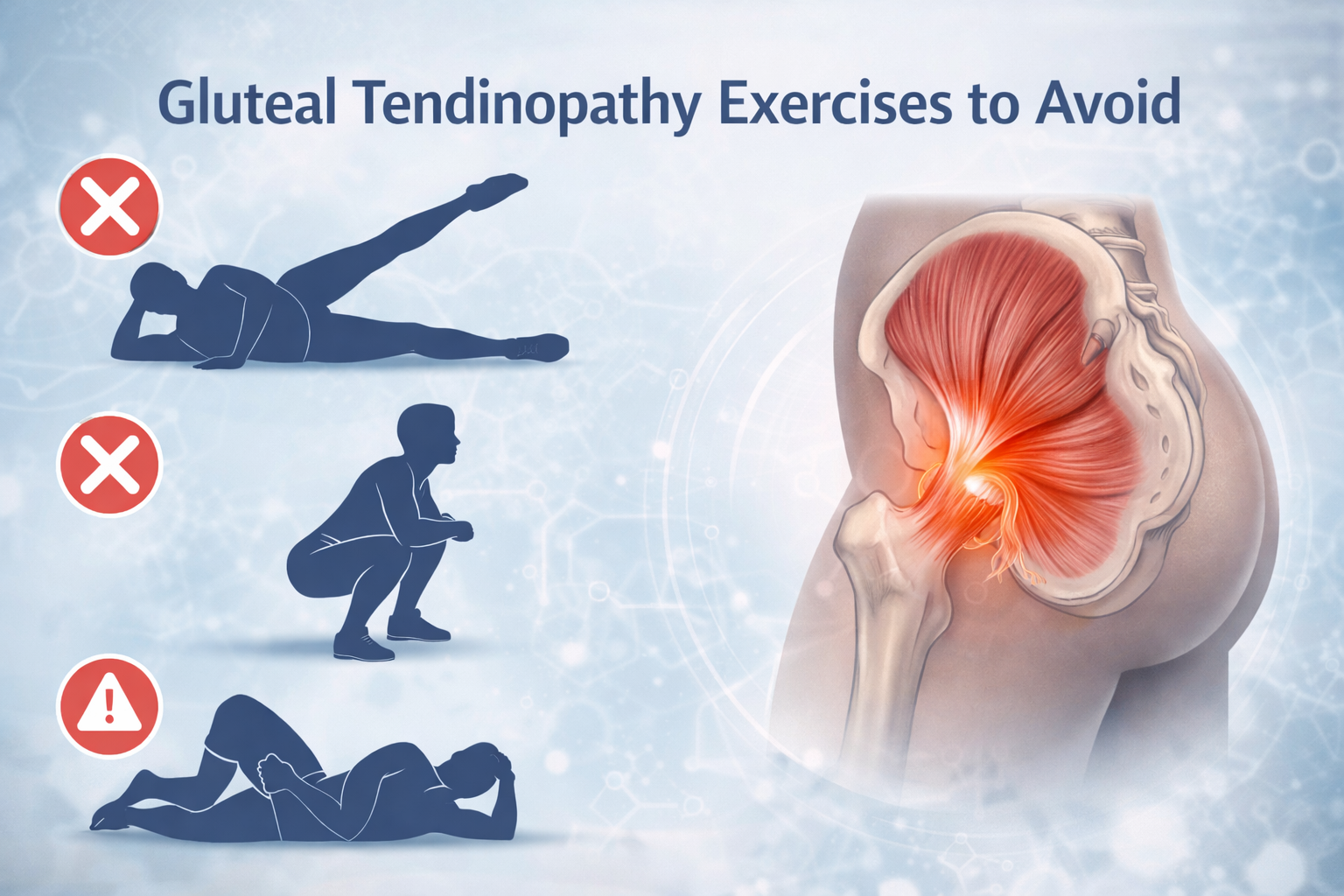
One of the most damaging mistakes involves deep hip stretching. Moves like long-held pigeon pose or aggressive cross-body glute stretches compress the already irritated tendon against the greater trochanter of the hip. While stretching feels relieving in the moment, studies show it can increase tendon degeneration over time. For people dealing with persistent outer hip pain, this type of compression slows healing rather than supporting it.
Another category raising concern includes side-lying leg lifts performed incorrectly. When the top leg drops behind the body or rotates outward, tendon load increases sharply. Many at-home rehab videos overlook proper alignment, turning a helpful exercise into a harmful one. Clinicians consistently list these movements among the most common gluteal tendinopathy exercises to avoid, especially during early recovery stages when the tendon is most vulnerable.
High-impact workouts that silently aggravate hip pain
Running hills, stair sprints, and plyometric workouts place intense, repeated load on the gluteal tendons. For healthy athletes, this stress can build strength. For someone with gluteal tendinopathy, it often leads to flare-ups that last weeks. The problem is not movement itself, but timing. High-impact training before the tendon regains tolerance can reset progress back to zero.
Even popular strength exercises like deep squats and lunges can become problematic. When performed with narrow stance or excessive depth, they increase hip adduction, compressing the tendon. Physical therapists across the US now advise modifying or temporarily avoiding these patterns. As awareness grows, more rehab programs emphasize load management rather than complete rest, while clearly defining gluteal tendinopathy exercises to avoid during flare-up periods.
Common daily movements that act like hidden exercises
Not all harmful movements happen in the gym. Simple daily habits can repeatedly irritate the tendon without being noticed. Sitting with crossed legs, leaning into one hip while standing, or sleeping on the painful side all increase compression. Over time, these small stresses accumulate, explaining why some people fail to improve despite stopping workouts altogether.
What surprises many patients is how rehabilitation success often depends on lifestyle changes first. Reducing side-lying pressure, adjusting desk posture, and avoiding prolonged hip hanging can dramatically reduce pain. Experts now stress that avoiding the wrong daily positions is just as important as avoiding the wrong workouts. In fact, these habits are often included in updated guidelines on gluteal tendinopathy exercises to avoid, even though they do not look like exercises at all.
What experts recommend instead of painful movements
Modern physiotherapy has shifted away from stretching toward controlled strengthening. Isometric glute exercises, performed in pain-free ranges, help maintain muscle activity without compressing the tendon. These movements improve load tolerance gradually, which research shows is key to tendon recovery. Programs now focus on slow progression rather than intensity, especially in the first six to eight weeks.
Education is another critical element. Patients who understand why certain movements hurt are more likely to recover fully. According to recent clinical data, individuals who correctly follow avoidance guidelines recover faster and report fewer relapses. This is why clinicians emphasize personalized plans rather than generic workouts. Knowing the correct alternatives while respecting gluteal tendinopathy exercises to avoid is becoming the gold standard in hip pain rehabilitation.
The future of hip pain treatment in the United States
As awareness grows, experts predict earlier diagnosis and fewer chronic cases. Wearable technology and AI-driven rehab apps are already being tested to monitor hip load and movement patterns. These tools aim to alert users when they unknowingly repeat harmful motions. With an aging yet fitness-focused population, demand for evidence-based tendon care is expected to rise sharply over the next decade.
Public health messaging is also evolving. Instead of pushing pain through workouts, the narrative is shifting toward smarter movement. Medical professionals hope this change will reduce unnecessary surgeries and long-term disability. At the center of this shift is simple education about gluteal tendinopathy exercises to avoid, empowering people to protect their hips before pain takes control.
If you or someone you know is struggling with persistent outer hip pain, do not ignore the warning signs. Reassess your workouts, question viral fitness advice, and seek professional guidance early. Share this article, start informed conversations, and take control of your recovery today before a small mistake becomes a long-term injury.
