

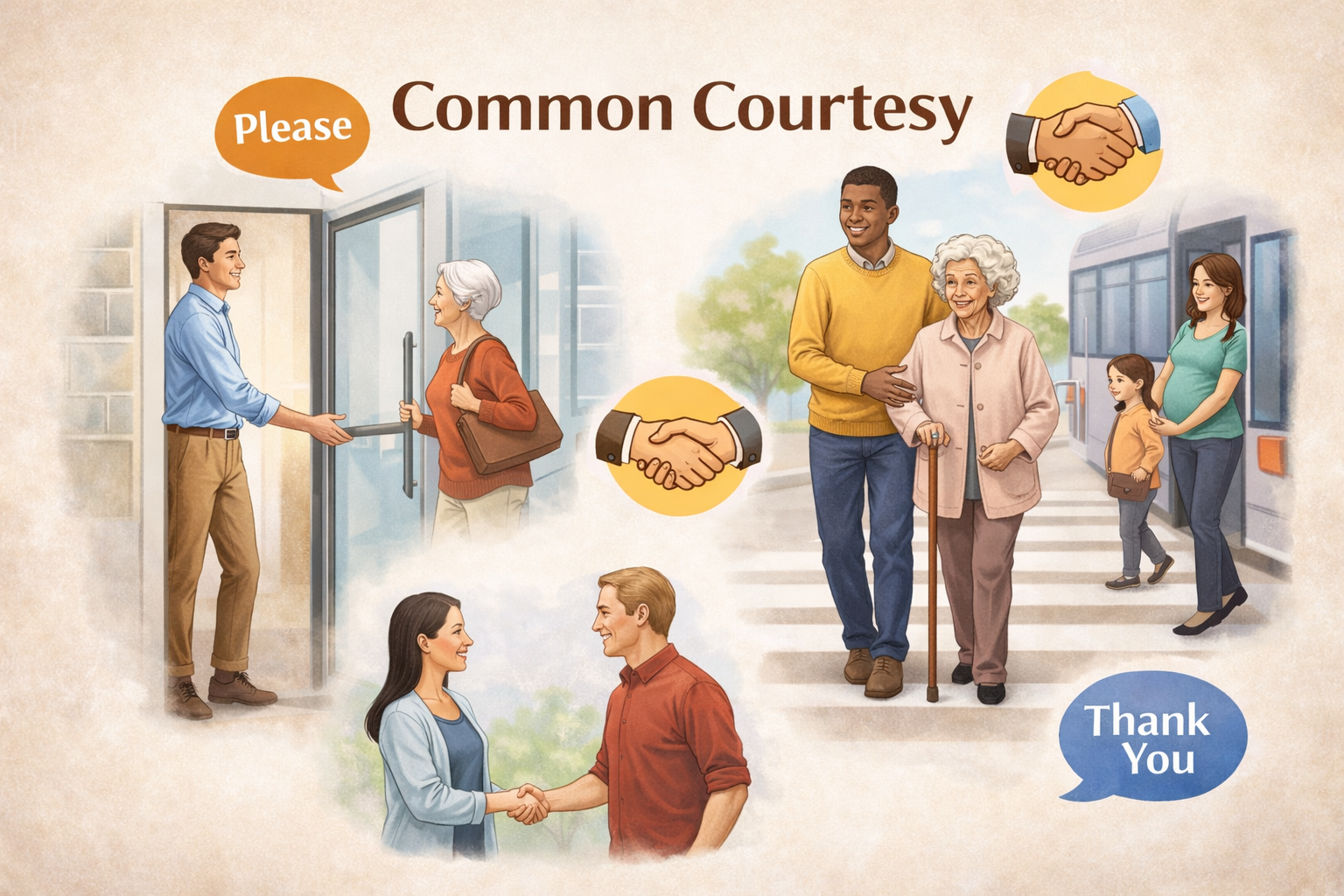
Something subtle has changed in everyday American life. Doors don’t get held as often. Thank-you waves are rarer. Conversations feel sharper, shorter, and more impatient. This growing unease is why common courtesy has suddenly become a trending topic across the United States. People aren’t just venting online. They’re asking real questions about respect, kindness, and what it means to coexist in crowded spaces. In a country built on social trust, the quiet erosion of simple manners feels personal, emotional, and unsettling.
Why Common Courtesy Is Trending Across the United States
The renewed focus on common courtesy didn’t appear out of nowhere. Social data shows a spike in searches and discussions tied to public behavior, workplace etiquette, and everyday respect. From viral videos of public confrontations to viral posts praising small acts of kindness, Americans are clearly reacting to something they feel slipping away.
Experts point to post-pandemic behavioral shifts as a major factor. Isolation changed social norms. People became more guarded, less patient, and quicker to react. As public spaces filled again, those changes became visible. Common courtesy now feels less like a given and more like a choice, which is exactly why it’s being discussed so widely.
The Psychology Behind the Decline of Common Courtesy
Psychologists say the decline in common courtesy is closely tied to stress and overstimulation. Americans are processing constant notifications, financial pressure, and political tension. When mental bandwidth is low, politeness is often the first thing to go. Short tempers replace small kindnesses, not out of malice, but exhaustion.
At the same time, digital communication has rewired how people interact. Online spaces reward speed and reaction, not reflection. When those habits spill into real life, patience suffers. Researchers warn that without conscious effort, common courtesy can erode simply because people stop noticing one another as humans.
How Technology Changed Everyday Manners
Smartphones didn’t kill common courtesy, but they reshaped it. In public spaces, eye contact has been replaced by screens. Interruptions feel normal. Silence feels awkward. This shift has altered how Americans interpret respect and attention.
Sociologists argue that technology created a buffer between people. When you’re absorbed in a device, you’re less aware of those around you. That lack of awareness often comes across as rudeness, even if it isn’t intentional. Over time, these micro-moments add up, reinforcing the belief that common courtesy no longer matters.
Common Courtesy in Public Spaces Under Pressure
Public spaces reveal the state of social behavior more clearly than anywhere else. From grocery stores to airports, Americans report more tense interactions and fewer polite exchanges. Lines feel more aggressive. Conversations feel louder. Patience feels scarce.
Urban planners and behavioral experts say overcrowding amplifies stress. When space feels limited, people prioritize themselves. In those moments, common courtesy requires conscious effort. Without social reinforcement, even small gestures like saying excuse me or holding a door can disappear from daily routines.
Workplace Culture and the Courtesy Gap
The workplace has become another battleground for common courtesy. Remote work blurred boundaries. Messages replaced conversations. Tone got lost. Employees report feeling ignored, rushed, or undervalued in professional settings more than ever before.
HR surveys show that respectful communication is now one of the top concerns for American workers. Lack of courtesy affects morale, productivity, and retention. When appreciation disappears, so does loyalty. This has pushed companies to rethink how everyday respect plays a role in long-term success.
Generational Views on Common Courtesy
Different generations view common courtesy through different lenses. Older Americans often associate it with manners taught at home. Younger generations tend to frame it as mutual respect and consent. Neither perspective is wrong, but the disconnect fuels misunderstanding.
Cultural analysts suggest the real issue isn’t values, but communication. When expectations aren’t shared, behavior gets misinterpreted. Bridging that gap requires empathy on both sides. Understanding how common courtesy evolves is key to keeping it alive across age groups.
Why Small Acts of Courtesy Matter More Than Ever
Research consistently shows that small acts of common courtesy have outsized effects. A simple thank you can lower stress. A smile can shift mood. A polite interaction can restore faith in others, even briefly.
In times of uncertainty, humans look for signals of safety and respect. Courtesy provides those signals. Behavioral scientists say societies with higher everyday politeness experience stronger social trust. In that sense, common courtesy isn’t outdated. It’s essential infrastructure for community well-being.
Social Media’s Role in Redefining Courtesy
Ironically, social media has both weakened and revived common courtesy. While online arguments normalize hostility, viral kindness stories remind people what’s possible. Videos of strangers helping strangers often perform exceptionally well because they fill an emotional gap.
These moments resonate because they feel rare. Viewers aren’t just watching politeness. They’re craving it. This dynamic shows that Americans still value common courtesy, even if they struggle to practice it consistently.
Can Common Courtesy Be Taught Again?
Educators and parents are asking whether common courtesy can be reintroduced intentionally. Schools across the U.S. are experimenting with social-emotional learning programs that emphasize empathy, listening, and respect. Early results suggest improvement in classroom behavior and peer relationships.
Experts say courtesy isn’t about rigid rules. It’s about awareness and consideration. When children see respectful behavior modeled consistently, they absorb it naturally. Rebuilding common courtesy starts with example, not enforcement.
What the Future Looks Like for Common Courtesy
Looking ahead, analysts predict a cultural correction. As burnout peaks, people may seek softer interactions and slower communication. Early trends already show growing interest in mindfulness, emotional intelligence, and intentional living. These movements align closely with common courtesy.
If workplaces, schools, and communities reinforce respect as a shared value, everyday behavior can shift. Courtesy doesn’t require perfection. It requires attention. The future of common courtesy depends on whether Americans choose to notice one another again.
