

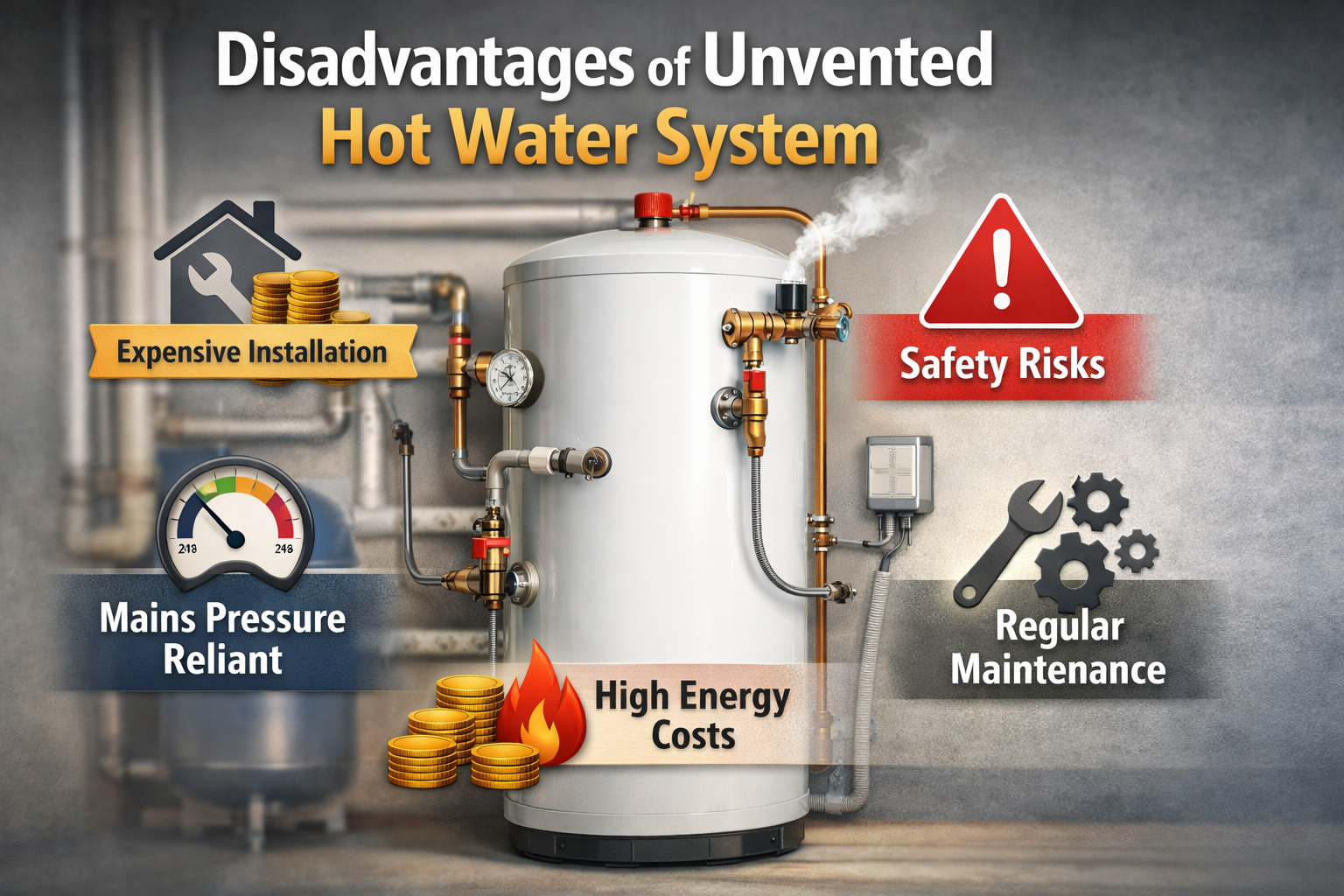
It starts with a promise many UK homeowners find hard to resist. Powerful showers. Strong water pressure. Modern living without a cold-water tank in the loft. Yet behind this polished image, a quieter conversation is spreading across housing forums, trade groups, and property news feeds. The disadvantages of unvented hot water system setups are becoming a growing concern, especially as energy costs rise and regulations tighten.
From unexpected bills to safety worries, more households are questioning whether the upgrade was really worth it. This is not a fringe debate anymore. It is a trending issue reshaping how British homeowners think about plumbing choices in 2025 and beyond.
Why Unvented Hot Water Systems Became So Popular
Unvented hot water systems gained popularity in the UK because they solved a long-standing frustration. Traditional vented systems rely on gravity-fed tanks, often resulting in weak water pressure. Unvented systems, connected directly to the mains, deliver consistent pressure to multiple taps at once. For busy households, this felt like a breakthrough.
Property developers also embraced these systems. They free up loft space, fit modern housing designs, and appeal to buyers seeking hotel-style bathrooms. However, as installations increased, so did real-world experiences. Over time, homeowners began to notice that the advantages came with trade-offs that were rarely highlighted at the point of sale.
High Installation Costs Catching Homeowners Off Guard
One of the most discussed disadvantages of unvented hot water system installations is the upfront cost. Unlike traditional systems, unvented cylinders require specialist components, safety devices, and certified engineers. This pushes installation costs significantly higher, often by thousands of pounds.
For homeowners renovating on a budget, this can be a shock. What starts as a plumbing upgrade quickly becomes a major financial decision. Even replacing an existing unvented cylinder can be costly, as regulations require systems to be updated to current standards, adding further expense many did not anticipate.
Ongoing Maintenance Is Not Optional
Maintenance is another key issue driving concern. Unvented systems are sealed and operate under high pressure, which means regular servicing is not optional. Annual checks by a qualified engineer are required to ensure safety valves and expansion vessels function correctly.
Skipping maintenance can invalidate warranties and home insurance. This ongoing obligation is one of the most overlooked disadvantages of unvented hot water system ownership. Over time, service costs add up, turning what seemed like a modern convenience into a recurring financial commitment that some households struggle to justify.
Safety Risks and Strict Legal Requirements
Safety is where the debate becomes more serious. Unvented hot water systems store water at high pressure and temperature. If safety controls fail, the risk is not theoretical. This is why UK law requires installation and servicing by engineers with specific G3 certification.
For homeowners, this creates dependency on specialist professionals. DIY fixes are not an option. Any fault, no matter how minor, demands expert attention. The disadvantages of unvented hot water system ownership become clear when repairs are urgent, costly, and legally restricted.
Vulnerability During Water Supply Interruptions
Another downside rarely discussed is reliance on mains water pressure. In areas where water pressure fluctuates or supply interruptions occur, unvented systems can become unusable. No mains water means no hot water at all.
In contrast, traditional vented systems can still provide limited supply from stored tanks. For rural properties or older neighbourhoods with inconsistent pressure, this vulnerability is a serious concern. It highlights how the disadvantages of unvented hot water system designs are closely tied to local infrastructure quality.
Energy Efficiency Concerns in a Cost-of-Living Crisis
Energy efficiency has become a national issue as UK households face rising utility bills. Unvented cylinders store large volumes of hot water, which can lead to heat loss if insulation is not optimal. Keeping water hot around the clock increases energy consumption.
While newer models are more efficient, many older systems remain in use. Homeowners report higher-than-expected heating costs, especially when paired with gas or electric boilers running frequently. This has pushed the disadvantages of unvented hot water system energy use into mainstream financial discussions.
Repair Complexity and Limited Engineer Availability
When things go wrong, repairs are rarely simple. Unvented systems contain pressure relief valves, thermostats, and expansion controls that must work together precisely. Diagnosing faults takes time and expertise.
In some regions, finding a qualified engineer quickly can be difficult. Delays mean extended periods without hot water. This inconvenience is a growing frustration, particularly for families. The reliance on a limited pool of specialists amplifies the disadvantages of unvented hot water system ownership across the UK.
Not Always Suitable for Older Properties
Older homes often present compatibility challenges. Pipework may not be designed to handle mains pressure, requiring extensive upgrades. In some cases, incoming water pressure is insufficient, making the system perform poorly despite high installation costs.
For period properties, these structural limitations can outweigh the benefits entirely. Homeowners renovating older houses increasingly report regret after discovering that the disadvantages of unvented hot water system integration were not fully assessed during planning.
Impact on Home Insurance and Compliance
Insurance is another hidden factor. Many policies require proof of annual servicing for unvented systems. Failure to provide documentation can complicate claims related to water damage or system failure.
This administrative burden adds stress. Homeowners must track service records and ensure compliance. Over time, this requirement reinforces perceptions that the disadvantages of unvented hot water system ownership extend beyond plumbing into broader home management responsibilities.
Environmental and Water Usage Concerns
Water efficiency is gaining attention as sustainability becomes a priority. Unvented systems encourage high-flow showers and taps, which can increase water usage. While this feels luxurious, it raises environmental concerns.
In regions facing water management challenges, this increased consumption may lead to future restrictions or higher tariffs. Critics argue that the disadvantages of unvented hot water system designs conflict with long-term sustainability goals promoted across the UK.
What Experts Predict for the Future
Industry experts predict a more cautious approach to unvented systems moving forward. Alternatives such as heat pump-compatible cylinders and hybrid solutions are gaining interest. These aim to balance pressure, efficiency, and safety.
As regulations evolve and energy prices remain unstable, homeowners are expected to scrutinise installation choices more closely. The disadvantages of unvented hot water system setups are likely to remain part of national housing discussions, influencing both new builds and renovations.
What UK Homeowners Should Consider Before Installing
Before committing, homeowners should assess water pressure, property age, maintenance budget, and long-term energy costs. Independent advice can prevent expensive mistakes. Understanding both advantages and disadvantages ensures realistic expectations.
If you are considering an upgrade, now is the time to research thoroughly. Speak to qualified professionals, compare alternatives, and weigh long-term implications. Making an informed decision today could save you thousands tomorrow. Stay aware, ask questions, and choose a system that truly fits your home and lifestyle.
