

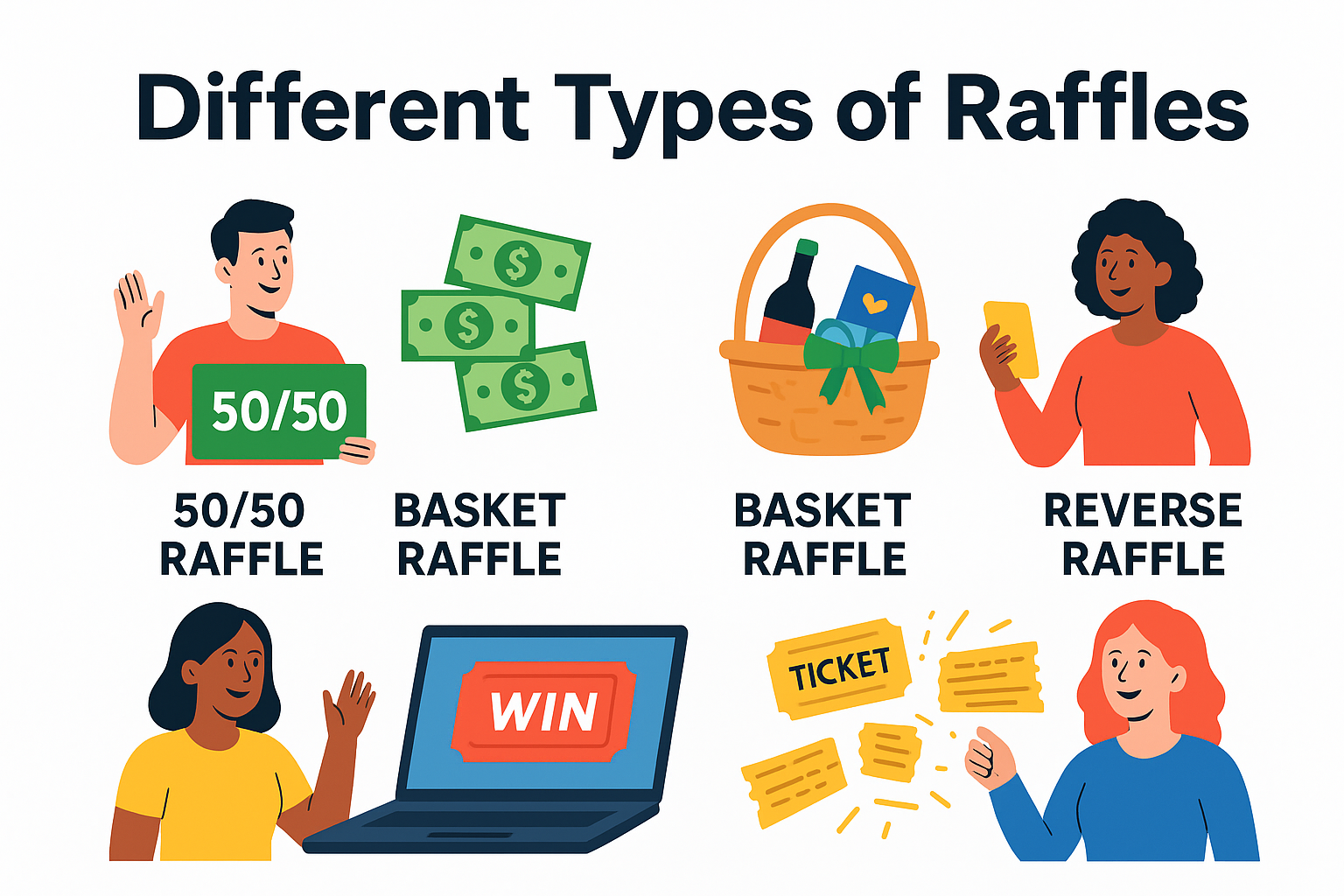
In 2025, raffles are faster, digital, interactive, and emotional. They fuel communities, reward engagement, and thrive on suspense. Trends show that 67% of donors are more likely to participate when a raffle feels like an experience instead of a transaction. Americans are hungry for chances that feel meaningful, exciting, and shareable. This shift has created a boom in different types of raffles that turn ordinary fundraising into cultural moments. And right now, organizers who ride this new wave are winning big.
People think raffles are simple. Buy a ticket. Hope. Win. But something big is quietly reshaping the fundraising world in America. Raffles are no longer just a side table at community events. They are becoming headline attractions, viral money generators, and full-blown social campaigns. Schools, nonprofits, influencers, sports clubs, and even small businesses are unlocking record-breaking revenue using creative raffle formats. Some campaigns are raising millions. Others are collapsing in hours from ticket sell-outs. The difference? Not luck. Innovation. The right strategy now matters more than the prize. And the most successful organizers know one thing: the future belongs to those who reinvent the game.
The Rise of Raffles as America’s Favorite Fundraising Power Tool
Raffles are no longer passive fundraisers tucked between speeches and silent auctions. They now dominate campaigns because they match modern attention spans—quick, thrilling, and outcome-driven. Data from the National Philanthropic Trust shows that small-scale raffles saw a 28% surge in participation last year, while digital gamified raffles grew by 63%. These numbers reveal a trend that can’t be ignored: raffle-based fundraising is moving at hyper speed, dominating schools, charities, sports teams, and social causes.
At the same time, traditional donation fatigue has reached a peak. Americans want more than “give because it’s good.” They want a chance. A story. A thrill. Nonprofits that swapped classic donation pages for structured raffles on social media raised 2.4x more on average. The attraction isn’t just the reward. It’s the anticipation. The countdown. The community buzz. Most of all, it’s the possibility that anyone can win. This mindset shift explains why different types of raffles are outperforming legacy fundraising models nationwide.
50/50 Raffles: Simple, Strong, and Still Dominating
The 50/50 raffle remains one of the most profitable formats in the U.S. for a reason: it’s incredibly simple and emotionally powerful. Participants know exactly what’s at stake. Half the total jackpot goes to the cause. The other half goes to a lucky winner. Transparency creates trust. And trust creates more ticket sales. Across community fundraisers in 2024, 50/50 raffles raised an average of 31% more than fixed-item raffles, especially at live events like sports games, school fairs, and charity runs.
But the model is evolving. Digital payment options, QR ticket scanning, and online jackpot trackers are turning 50/50 raffles into real-time spectator events. Many local fire departments, youth leagues, and nonprofit auctions now stream the draw live, adding national reach. A church in Georgia recently raised $87,000 in one night using a livestream 50/50 raffle. The reason this format thrives is simple: the larger the crowd, the larger the pot. And the thrill scales with every new ticket purchased.
Reverse Raffles: Suspense That Keeps People Hooked
Reverse raffles flip everything upside-down. Instead of drawing one winner, numbers are eliminated one by one until one ticket is left standing. This creates adrenaline. Drama. And audience obsession. Unlike standard draws that end in seconds, reverse raffles create long, cinematic moments that feel almost like a live game show. For organizers, this means more engagement, more ticket sales, and longer crowd retention on event day.
This format performs exceptionally well at charity galas and community fundraisers aiming to increase table sales, food purchases, sponsorship exposure, and attendee participation. Some events even introduce “buy-back” opportunities, where eliminated ticket holders can pay to re-enter. This single twist can add thousands of dollars in revenue. Reverse raffles are proof that fundraising success often depends less on the prize and more on the experience.
Online Raffles: The Fastest Growing Revenue Engine
Online raffles are no longer the future. They are the now. Last year alone, digital raffles in the U.S. generated over $850 million across nonprofits and community projects. The model removes geography, increases participation, and leverages social sharing to expand reach organically. Online raffles also eliminate common barriers such as physical venue limits, cash-only bottlenecks, and local attendance requirements.
These raffles often bundle in digital bonuses like early-bird draws, multi-ticket discounts, and referral rewards. Campaigns that integrate social platforms, SMS offers, and countdown-based marketing routinely sell out within 72 hours. The secret lies in accessibility—anyone in the country can buy a ticket with one tap. This convenience factor alone explains why online raffles are reshaping the landscape of different types of raffles in America.
Basket and Themed Raffles: Visual and Emotional Powerhouses
Basket raffles convert curiosity into impulse participation. They work because humans are visual buyers. Whether it’s a family movie night bundle, gourmet cooking kit, self-care wellness pack, or tailgate football set, the presentation itself becomes the marketing. Schools and PTA groups in particular have turned themed raffles into flagship fundraising attractions, raising record profits without offering huge cash prizes.
Themed raffles also spark emotional connection. A “Staycation Survival Kit” raffle pulls in parents. A “Game Day Championship Pack” speaks to sports fans. A “Date Night Giveaway” pulls couples. The more specific the theme, the stronger the audience pull. The strategy is no longer broad appeal—it’s micro-targeted excitement. And it works. The reason themed raffles scale is simple: they sell lifestyle, not just chances.
Calendar Raffles: 365 Chances, One Smart Strategy
Calendar raffles offer daily drawings, weekly draws, or monthly prizes tied to actual dates on a calendar. This format generates sustained engagement over long periods and ensures repeat interaction from supporters. Instead of a one-time hype window, calendar raffles create 30, 60, or 365 touchpoints—turning fundraising into a habit, not an event.
These raffles are popular among schools, churches, and nonprofit loyalty campaigns because winners can still win again. This increases excitement and reduces regret for participants. Additionally, calendar raffles create multiple sponsorship ad spots that can be sold to local businesses, multiplying fundraising revenue without increasing ticket pricing. This layered revenue model makes calendar raffles one of the smartest long-term formats in today’s market.
Penny Raffles: Affordable Entry, Big Participation
Penny raffles work on one beautifully simple principle: ticket holders can assign tickets to the prizes they want the most. You don’t enter one draw. You enter the ones you like. This customization increases participation, satisfaction, and perceived odds of winning. Schools, youth groups, and community festivals love this format because it encourages bulk ticket purchases without requiring high entry fees.
Because participants self-select prizes, organizers gain valuable insight into audience preferences. This data helps future raffles perform even better. Penny raffles also create visual excitement at events, with ticket jars filling up like progress meters. The psychological pull is strong—when people see others participate, they jump in too. It’s social proof in action.
Merchandise and Experience Raffles: The New Status Symbol Wins
The era of generic gift cards and small gadgets is fading. Americans now crave memorable experiences. Travel vouchers, concert tickets, VIP sports passes, celebrity meet-and-greets, luxury weekend stays, culinary tours, backstage passes, and adventure packages dominate raffle wish lists. These prizes sell aspirations, not objects.
Experience-based raffles also attract media attention and sponsor interest far more easily than average giveaways. Local news outlets are 5x more likely to cover raffles with high-interest experiences over standard item packages. In 2025, the value is shifting from “what you own” to “what you live.” Organizations that understand this emotional currency raise more, faster, and louder.
LSI Keywords Shaping Raffle Trends Right Now
The current raffle landscape is influenced by connected terms and rising search behavior. The most impactful related keywords today include: charity fundraising, giveaway contests, nonprofit donations, community outreach, online ticketing, cause-based marketing, school fundraising ideas, gaming-style raffles, prize draw campaigns, and social fundraising trends. These terms represent the ecosystem where modern raffles now thrive and compete for attention.
Organizers using these concepts strategically pair community trust with digital distribution, amplifying reach beyond local borders. The result is growth that isn’t linear—it’s exponential. Raffles are no longer mini fundraisers. They are media events, revenue accelerators, and community unifiers.
The Future of Raffles in America
Experts predict that transaction-free fundraising will drop by 18% by 2026, while hybrid online-live raffles will grow another 47% in the same period. The future is clear. The winners will be organizers who stop selling tickets and start selling stories. The most powerful different types of raffles of tomorrow will feel less like fundraisers and more like movements.
Community-driven gamification, digital-first participation, emotional storytelling, influencer amplification, and curated prize experiences are setting the stage for a new golden era. Creativity, not budget, will determine breakthrough success.
You may also Read
Walkathon Ideas 2025: The New Wave of Community Power in the U.S.
